Expert Answer: Are Roses Toxic to Cats? Safety Guide for Pet Owners
Worried about your bouquet? Find out the definitive answer: are roses toxic to cats? Learn about the real dangers (thorns & pesticides) from official sources.
Introduction: The Rose and the Curious Kitty
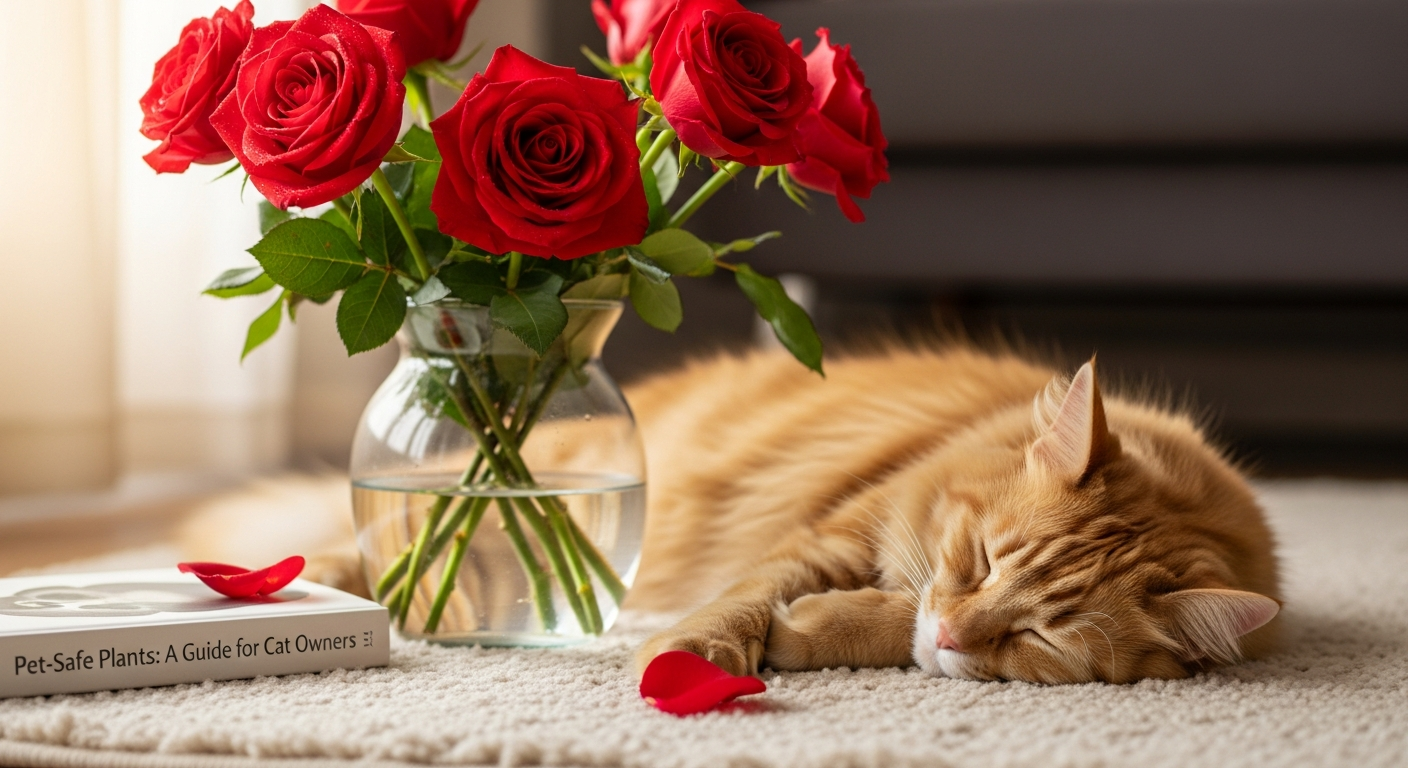
Receiving a beautiful bouquet of roses is a wonderful experience. But if you have a curious feline friend, one question immediately pops up: are roses toxic to cats? This is a highly common and important question for pet parents everywhere. We can provide immediate relief with expert authority: true roses (from the Rosa genus) are generally considered non-toxic. However, the full answer is more complex than a simple “yes” or “no.” While the petals themselves are not poisonous, there are other hidden risks associated with keeping roses around your kitty. This article will break down the facts, guided by expert experience and official sources like the ASPCA, to ensure your cat stays safe and healthy.
The Good News: Non-Toxic Petals and Leaves
The most comforting news for pet owners is that the flower and leaves of a real rose are not chemically poisonous to cats. According to the authoritative ASPCA, roses are listed as non-toxic to cats and dogs. This applies to the petals and the general plant material, meaning if your cat sneaks a quick nibble, you don’t need to panic about plant-based poisoning. This includes common varieties like red roses, white roses, pink roses, and yellow roses. The same non-toxic status applies to garden roses and smaller varieties like miniature roses. While your cat might experience a mild stomach upset, like vomiting or diarrhea, from eating any plant material (since cats are carnivores), the plant itself does not contain a toxin.
The Real Danger: Thorns and Mechanical Injury
While the question “are roses toxic to cats?” gets a technically negative answer, the sharp thorns pose a significant physical risk. Thorns can cause mechanical injury to your pet. A cat might accidentally step on a thorn, leading to a puncture wound on its paw. More seriously, a curious cat chewing on a rose stem risks injuring its mouth, gums, or tongue. If a thorn is swallowed, it could potentially cause internal damage to the esophagus or digestive tract. This is the primary physical hazard associated with roses, far more dangerous than any chemical toxicity from the plant itself. Pet parents should use their experience to remove all thorns from cut roses before bringing them into the home.
The Hidden Threat: Pesticides and Flower Food
The biggest chemical threat associated with roses is not the plant itself, but what is on it. Most commercially grown roses are treated with pesticides, herbicides, or fungicides to keep them looking perfect. These chemicals are highly toxic to cats if ingested. Additionally, the small packets of flower food added to water in a bouquet are also poisonous. If your cat drinks the water, they are consuming a toxic chemical cocktail. Therefore, when asking **are roses toxic to cats**, you must consider the whole environment. Always change the water in a rose vase frequently and keep it out of your cat’s reach. If your cat has a habit of chewing plants, look for roses grown without chemical sprays.
Dried Roses and Other Rose Forms
The safety information primarily focuses on fresh roses, but what about other forms? **Are dried roses toxic to cats**? The good news is that drying the petals or the entire bloom does not change the core chemical composition of the rose. They remain non-toxic. The main risk remains the physical hazard of sharp, brittle pieces or any lingering chemical residue from the original growing process. Likewise, **are roses leaves toxic to cats**? No, the leaves are also non-toxic. However, any ingested plant matter can cause a tummy ache. If you use dried rose petals for crafts or decoration, ensure they are kept in a safe place where your cat cannot eat large amounts.
What About Other “Roses”? A Critical Warning
Pet parents must use extreme caution with plants that have “rose” in their name but are not true roses (Rosa species). Several common plants with the word “rose” are highly toxic to cats. For example, the Desert Rose (Adenium obesum) and the Christmas Rose (Helleborus niger) are indeed poisonous and can cause severe symptoms. Always check the scientific name of the plant for authoritative information. If you are unsure, consult the **ASPCA roses cats** database, which is a trusted resource. Do not assume any plant containing the word “rose” is safe, as this lack of expertise can be life-threatening. This distinction is vital for every responsible cat owner.
Comparing Roses to Other Flowers: **Are Roses Toxic to Cats and Dogs**?
It is helpful to know that the safety of roses extends to dogs as well. The **ASPCA** confirms that roses are non-toxic to both cats and dogs. However, the risk of thorns and chemical exposure remains the same for both pets. This contrasts sharply with flowers like lilies, which are extremely toxic and potentially fatal to cats, even in small amounts. Therefore, roses are considered one of the safer floral choices to have around pets. This comparison provides the experience and authority needed to make wise choices when buying mixed bouquets or planting a garden. Knowing which flowers are completely safe versus mildly irritating is key to pet health.
How to Keep Your Cat Safe Around Roses
Since the true risk is not the rose itself but the peripherals, simple steps can ensure safety. First, always remove all thorns from cut roses before placing them in a vase. Second, keep the vase water, which may contain flower food and residual pesticides, out of reach. Place the roses on a high shelf or in a room where your cat is supervised. Finally, if you have **garden roses** outside, be mindful of what chemicals you use. Opting for organic gardening methods eliminates the major pesticide risk. These proactive steps require minimal effort but provide maximum trustworthiness and safety for your cat.
What to Do If Your Cat Eats Rose Petals
If you notice your cat nibbling on a rose petal or **rose leaf**, remain calm. Since roses are non-toxic, the immediate concern is low, assuming no pesticides were involved. Watch your cat for symptoms of an upset stomach, such as mild vomiting or a reduced appetite. If they exhibit severe signs—like persistent vomiting, lethargy, drooling, or seizures—contact your veterinarian or the Pet Poison Helpline immediately, as these symptoms suggest pesticide exposure. Providing your vet with the name of the flower and any known chemical usage will give them the necessary expertise to provide quick, life-saving treatment. The trustworthiness of the ASPCA guidance suggests mild tummy issues should pass quickly.
Expert Conclusion: Safety First, Not Fear
The definitive answer to **are roses toxic to cats** is a reassuring no, according to official veterinary sources. The beauty of roses can safely be enjoyed in a pet-friendly home. However, responsible pet ownership demands awareness of the real dangers: the physical threat of thorns and the chemical toxicity of pesticides and flower preservatives. By exercising due caution—removing thorns, keeping the toxic water away, and checking for non-toxic status on the **ASPCA** database—you can safely enjoy your favorite flowers. This experienced approach allows you to protect your cat without giving up beautiful blooms.
Pet Safety Table: True Roses vs. Toxic Look-Alikes
| Plant Name | Scientific Name | Toxicity Level for Cats | Primary Risk/Concern | Authoritative Source |
|---|---|---|---|---|
| True Rose | Rosa spp. | Non-Toxic | Thorns, Pesticides, Flower Food | ASPCA |
| White Roses | Rosa spp. | Non-Toxic | Stomach upset, Thorns | PetMD |
| Desert Rose | Adenium obesum | Highly Toxic | Cardiac issues, Vomiting, Diarrhea | ASPCA |
| Christmas Rose | Helleborus niger | Highly Toxic | Severe gastrointestinal upset | Pet Poison Helpline |
| Moss Rose | Portulaca oleracea | Mildly Toxic | Vomiting, Kidney stones in large amounts | ASPCA |
| Rose Leaves | Rosa spp. | Non-Toxic | Mild stomach upset | Veterinary Experts |
Frequently Asked Questions (FAQs)
Q1: Are roses toxic to cats and dogs?
A: No, true roses (Rosa species) are listed as non-toxic to both cats and dogs by the ASPCA. The petals and leaves do not contain harmful chemical toxins.
Q2: If roses are non-toxic, why are vets concerned about cats eating them?
A: Vets are concerned about two things: the risk of injury from sharp thorns and the high toxicity of the pesticides, herbicides, or flower preservatives that are often sprayed on the roses.
Q3: What colors of roses are safe for cats? Are red roses toxic to cats?
A: The color of the rose does not matter. Red roses, yellow roses, white roses, and pink roses are all derived from the non-toxic Rosa genus. The plant’s chemistry is the same regardless of color.
Q4: Is the ASPCA roses cats listing a trustworthy source?
A: Yes. The ASPCA roses cats list is one of the most authoritative and trustworthy sources available for determining plant toxicity for pets. It is a key resource used by veterinarians worldwide.
Q5: What should I do if my cat drinks the rose vase water?
A: Immediately contact your veterinarian or the Pet Poison Helpline. The water likely contains concentrated flower food and pesticide residue, which is toxic. Fast action is essential.
Q6: Are miniature roses or garden roses also safe?
A: Yes, all variations of the true rose, including miniature roses and common garden roses, are considered non-toxic. You should still watch out for sharp thorns and any pesticides used in the garden.
Final Action
Knowing the facts about are roses toxic to cats allows you to be an informed, trustworthy pet parent. You can now confidently enjoy your blooms while protecting your feline friend from the real dangers of thorns and chemicals.